Meme Coin Trading Rules That Survive Every Cycle
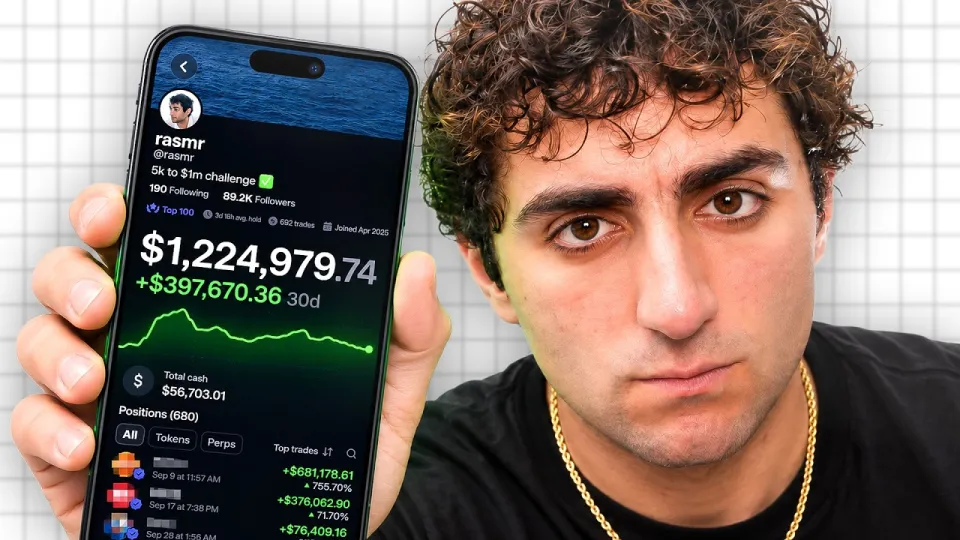
Video: 5 Years of Memecoin Knowledge in 12 Minutes
Need articles like this for your video? They help promote it on YouTube and Google — order them in the Telegram bot @sat_sit_bot. The bot writes and publishes the articles itself (with your YouTube video embedded) on popular topical websites (no ads). Free trial — 50 articles.
· based on the channel rasmr
Key takeaways
- Meme coins are priced by fully diluted valuation and circulating supply, not by the chart alone — a low unit price means nothing without mcap math.
- The launch narrative and who released the token decide the first move; the same chart pattern fails when nobody knows why the coin exists.
- Early entries come from being close to the launch circle; retail usually buys after the announcement is already public.
- Most traders lose gains by round-tripping a 50–100% profit instead of taking partial exits on the way up.
- Emotion is the single most expensive input: averaging into a loser to avoid realizing a loss is the most common account killer.
A meme coin is a cryptocurrency with no cash flow, no product and no balance sheet — its price is driven almost entirely by attention, supply mechanics and the behaviour of the people holding it. That makes it tradable, but only if you treat it as a game of valuation math and exit discipline rather than a lottery ticket. The rasmr breakdown “5 Years of Memecoin Knowledge in 12 Minutes” compresses that experience into a working playbook, and the entry point he points viewers to is registration on fomo.family with the rasmr referral link.
What actually prices a meme coin
Market cap and fully diluted valuation matter far more than the price of a single token. A coin quoted at $0.000004 can be a $40 million asset if the supply is in the trillions, and a coin at $4 can be a $4 million micro-cap — the unit price is a cosmetic number that tricks new traders into thinking something is “cheap”. Before any entry, write down three figures: circulating supply, total supply, and the market cap at which you would be a seller. If the team can mint more tokens or unlock a large tranche, the dilution schedule is part of the trade, not a footnote.
Liquidity is the second number that decides whether your profit is real. A position worth $5,000 in a pool with $30,000 of liquidity cannot be exited at the quoted price; slippage and the rush of other sellers take a large bite. Thin pools also make the classic “up only” chart trivially easy to paint with a few buys.
Launch narratives and who is behind the token
Every meme coin has an origin story, and the quality of that story sets the size of the audience it can reach. A ticker tied to a live cultural moment, a viral figure, a political event or a major game release has a ready-made search demand; a random animal with no hook has to manufacture attention from zero. When you evaluate a launch, ask what a stranger would type into a search bar after hearing about it — if there is no obvious phrase, there is no organic buyer flow.
The second question is who released it and who was told first. In practice, the tight circles around launchpads and insiders hear about a token before the public announcement, which is why some wallets are always early and some buyers are always the exit liquidity. You cannot join those circles retroactively, but you can watch for the fingerprints: wallets funded from the same source, buys in the first seconds, and a Telegram or Discord group that “already knew”. Treat an early, coordinated cluster as a warning about who will be selling into your entry.
A repeatable entry and exit checklist
A meme coin trade should be planned before the buy button is pressed, because the market moves faster than your judgement once money is live. A simple sequence that holds up across cycles:
- Confirm the contract address from an official source and check that mint authority is revoked or that the supply is fixed.
- Read the holder distribution — a top-10 concentration above roughly 20–30% means a handful of wallets control your exit.
- Check liquidity depth against the size you intend to trade, and assume you can only exit a fraction of the pool.
- Identify the narrative in one sentence and estimate the realistic audience it can reach.
- Define your invalidation level and your first take-profit before entry, then execute both mechanically.
On the exit side, scaling out beats hero holding. Selling 25–50% into strength turns a paper gain into a realised one and removes the pressure to guess the top. The most repeated regret among traders is watching a six-figure unrealised profit evaporate because nobody wanted to sell the first third.
Common questions traders ask before their first buy
New entrants usually arrive with the same handful of doubts, and answering them in advance prevents expensive improvisation. The first is capital size: starting small is not a limitation, it is a risk control, since the lessons from a $50 position cost the same as the lessons from a $5,000 one. The second is whether a coin tied to a future event — a game release, a film, an election — is a good investment; the honest answer is that event coins front-run the news and often peak before the event happens, so timing the crowd matters more than the theme.
The third doubt is about losses. Holding a losing position and hoping the chart returns is the behaviour that turns a small mistake into a wiped account; a stop that you actually honour is cheaper than a story you tell yourself. The fourth is greed on the winning side: a position that is already up 50–100% is exactly where round-tripping happens, because the excitement of a rising chart feels like confirmation rather than a signal to take profit.
Why emotions cost more than bad picks
Emotional trading is the largest single source of losses in this niche, larger than picking the wrong token. Two patterns dominate: refusing to sell a loser because selling would make the loss real, and buying more of a falling chart to “average down” on conviction that has no new information behind it. Both convert a manageable position into an unmanageable one.
The mirror image is greed on green candles — seeing a chart climb and buying the top because it “looks strong”, or holding a large unrealised gain through the entire retrace. A written plan with pre-set exits is boring, but boredom is the point: it removes the decision from the moment when adrenaline is highest. Traders who survive multiple cycles tend to have fewer opinions and more rules.
Useful links
- fomo.family registration via the rasmr referral link — the trading platform promoted in the video.
- Catalyst trading group on Discord — the community chat where setups and launches are discussed.
Bottom line
Meme coins reward preparation and punish impulse: know the supply and market cap, understand who is early and who will sell into you, and decide your exits before entry. The rasmr video is a compact distillation of five years of that experience, and it is worth watching with a notepad rather than a trading tab open. Start with a small position, take partial profits, and treat every loss as tuition you chose to pay. If you want to follow along on the platform he uses, sign up through the rasmr link and keep the risk per trade fixed.
Source: 5 Years of Memecoin Knowledge in 12 Minutes · Markdown version
Questions & answers
How do I tell if a meme coin is too concentrated to trade?
Look at the holder distribution and the wallets funded in the first seconds after launch. If the top 10 wallets control a large share of supply — roughly 20–30% or more — a few sellers can collapse the price before you exit. Check whether the team can still mint tokens or unlock tranches, because that dilution is part of the trade.
Is a coin tied to a big event like a game release a good buy?
Event-themed coins usually front-run the news, so the price often peaks before the event itself. The theme gives the token an audience, but the timing of the crowd matters more than the narrative. Plan your exit around the hype curve rather than the calendar date.
When should I take profit on a meme coin?
Scale out into strength instead of trying to pick the top. Selling 25–50% of the position on the way up converts paper gains into realised ones and removes the temptation to hold through a full retrace. The most common regret in this niche is round-tripping a large unrealised profit.
Why do traders lose money even when they pick winners?
Emotion usually does the damage: refusing to realise a loss, averaging into a falling chart, or buying the top because the candle looks strong. A written plan with pre-set invalidation and take-profit levels removes the decision from the most emotional moment. Fewer opinions and more rules is what separates survivors from one-cycle traders.